Injera: the teff flatbread that is also your plate (and it is gluten-free)
4 min read
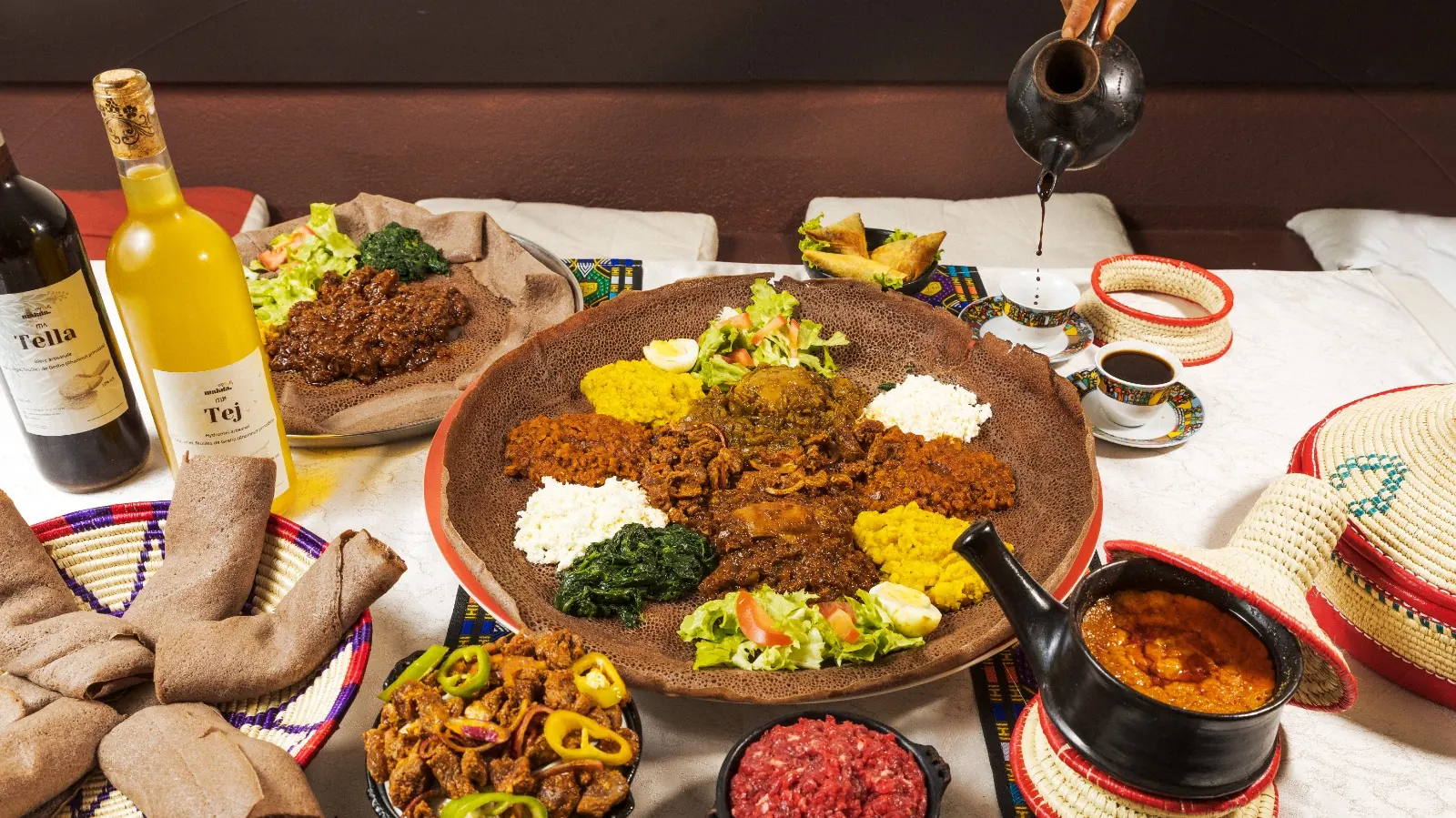
At Makda there are no plates or cutlery on the platter. Instead there is a large, soft, spongy flatbread: injera. It holds the dishes, is used to pick them up and soaks up their sauces. It is the heart of Ethiopian and Eritrean cooking.
Teff, a tiny grain
Injera is traditionally made from teff, a grain grown for thousands of years in the highlands of Ethiopia and Eritrea. Its seeds are tiny, barely bigger than a pinhead. Teff is naturally gluten-free and rich in fibre.
How injera is made
- Teff flour is mixed with water to make a thin batter.
- The batter rests for several days: fermentation gives it its light texture.
- It is poured in a spiral onto a large, very hot round griddle called a mitad.
- It is cooked on one side only, under a lid: small bubbles form on the surface and create its spongy look.
A mild injera
Many injeras have a fairly strong sour taste from the fermentation. Over the years our chef has perfected her recipe to make a milder injera without that pronounced sourness: it goes with the dishes without overpowering them, which first-timers love.
100% teff, so gluten-free
Outside Ethiopia, teff is expensive and hard to find, so many restaurants mix their injera with wheat or barley flour, which contain gluten. At Makda the injera is 100% teff. All our main dishes are served on it and are therefore gluten-free. Only the sambusa, made with wheat pastry, contain gluten.
An important note if you are coeliac: everything is prepared in the same kitchen, so traces are possible. Let us know when you book and we will advise you.
Our gluten-free and vegan dishes
The best bite
Regulars know it: the best part of the meal comes at the end, when you reach the injera at the bottom of the platter, soaked with the sauces of every dish. Do not leave it!