First time at an Ethiopian restaurant: a short guide
4 min read
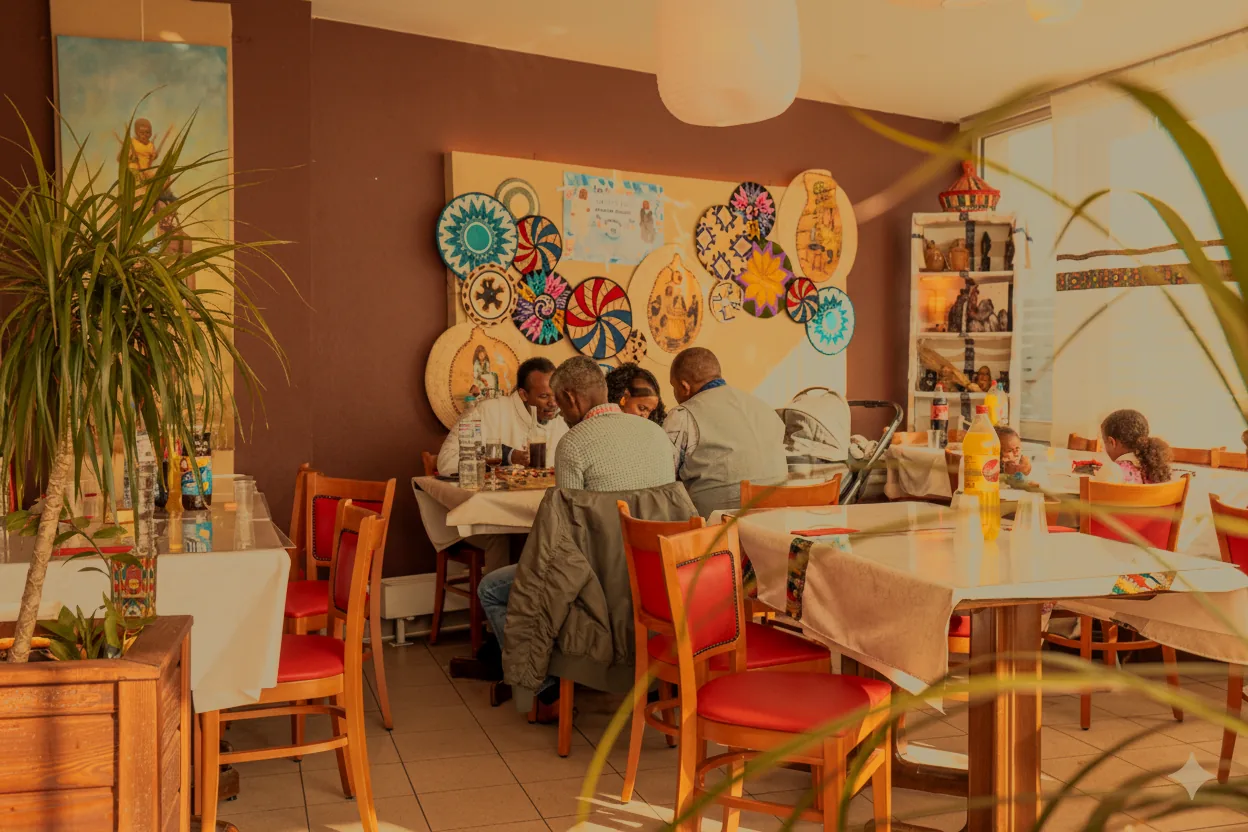
Never eaten Ethiopian food? Good news: there is nothing complicated about it, and that is exactly what makes the meal so friendly. Here is what to expect.
You share
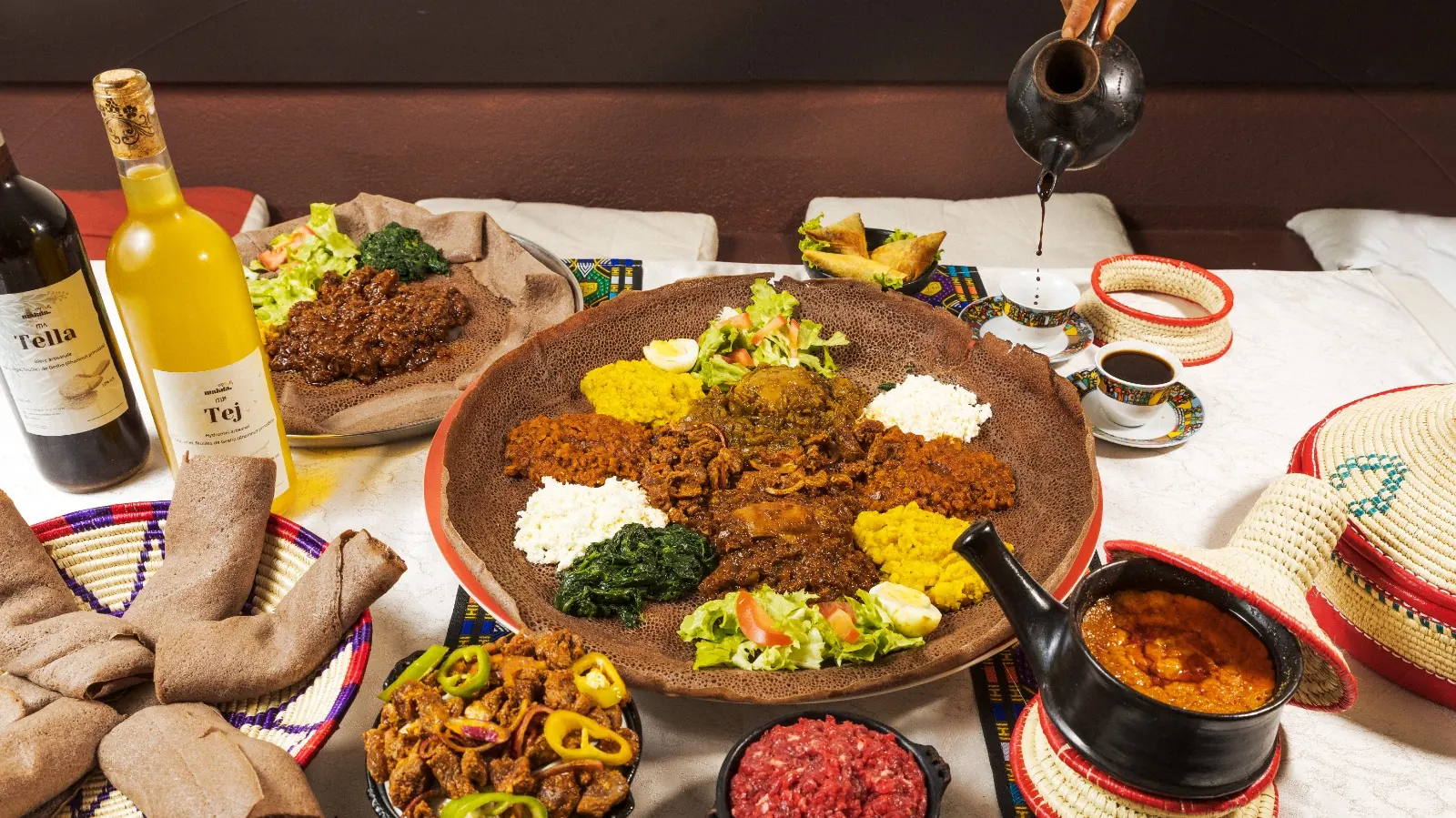
The dishes arrive together, laid on a large injera in the middle of the table. Everyone helps themselves from the part in front of them. It is food made for sharing with family, friends or colleagues.
You eat with your right hand
- Wash your hands before sitting down.
- Tear off a piece of injera with your right hand.
- Use it to pinch a little of a dish, then bring it to your mouth.
- You do not need to get it right first time: everyone gets the hang of it quickly.
And if someone close to you offers you a mouthful by hand, that is gursha: a gesture of affection and friendship. Returning it is always appreciated.
What to order?
The easiest option for a first visit is the Menu Makda, designed for 2 to 4 people, vegan or with meat. You taste several dishes at once. To build your own, mix textures and intensities:
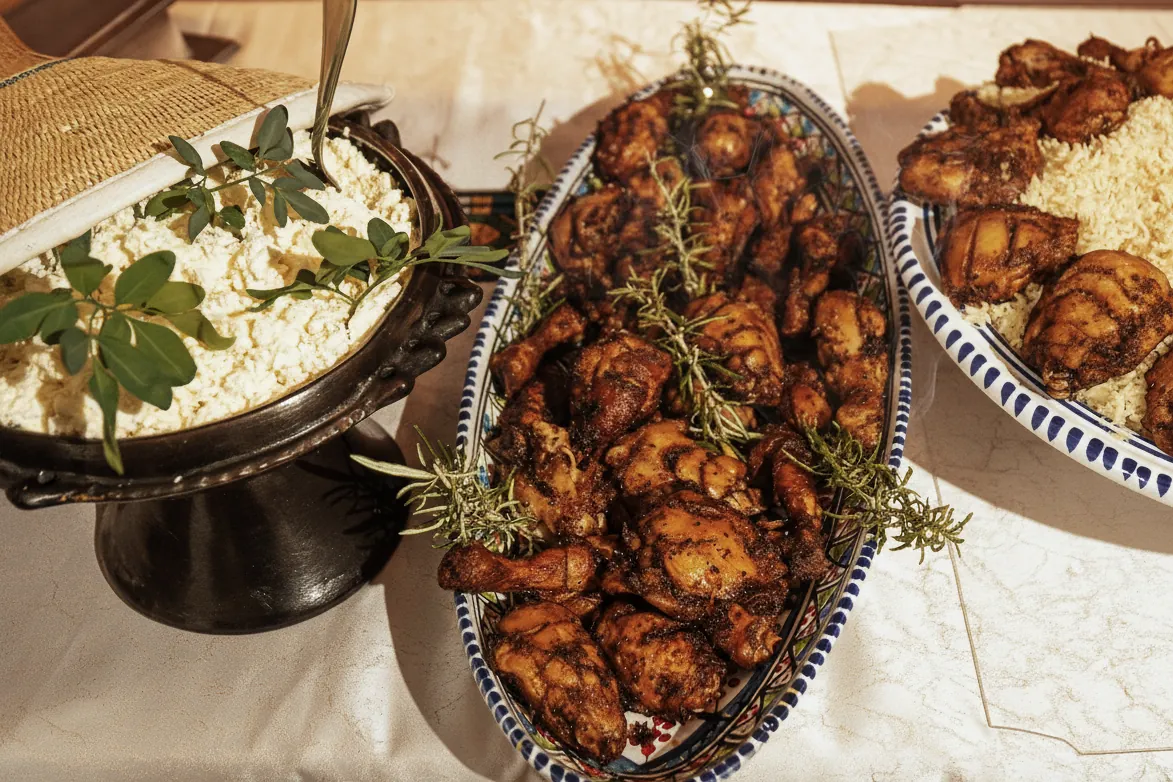
- Mild: doro alecha (chicken with turmeric) or shiro (slow-cooked split peas).
- Spicier: tibs (meat sautéed with chillies) or zigni (spiced stew).
- The classic: doro wet, the festive dish in berbere sauce.
- For the curious: kitfo, minced beef tartare-style with spiced butter.
- Vegan: misir wat, red lentils in berbere.
Spiced, not fiery
Berbere, the signature spice blend, is warm and fragrant rather than burning hot. If you are wary of chilli, start with the mild dishes and tell us: we will guide you.
Why so many vegan dishes?
In the Ethiopian Orthodox tradition, people fast on Wednesdays and Fridays and during long periods before major feasts: no meat and no dairy. As a result, pulse dishes are not "options" but recipes in their own right.
To finish
Save room for an artisan ice cream made in Bernex, or try tej, the traditional honey wine. Above all, take your time: an Ethiopian meal is never rushed.