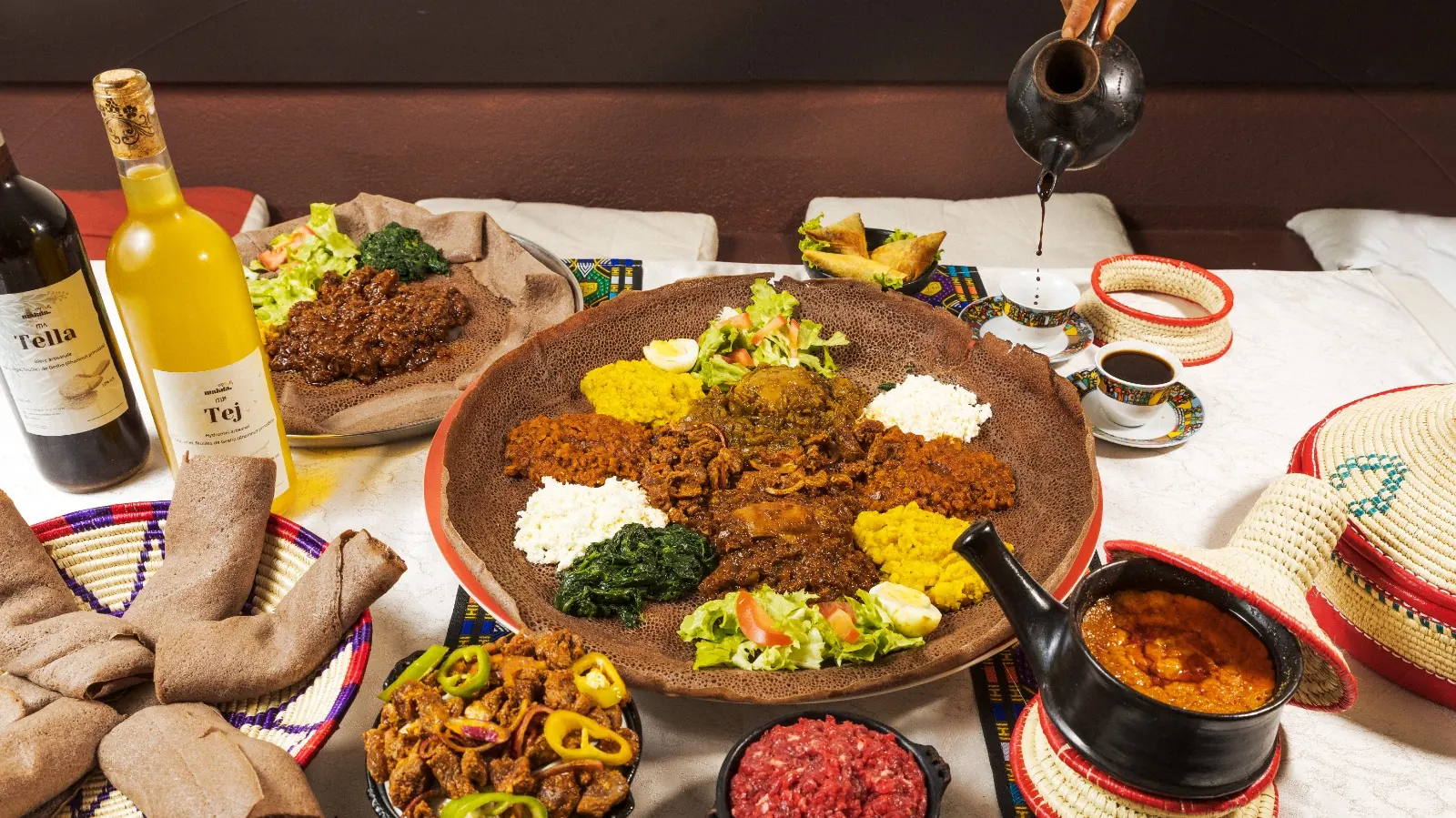
The Ethiopian coffee ceremony (buna) explained
4 min read
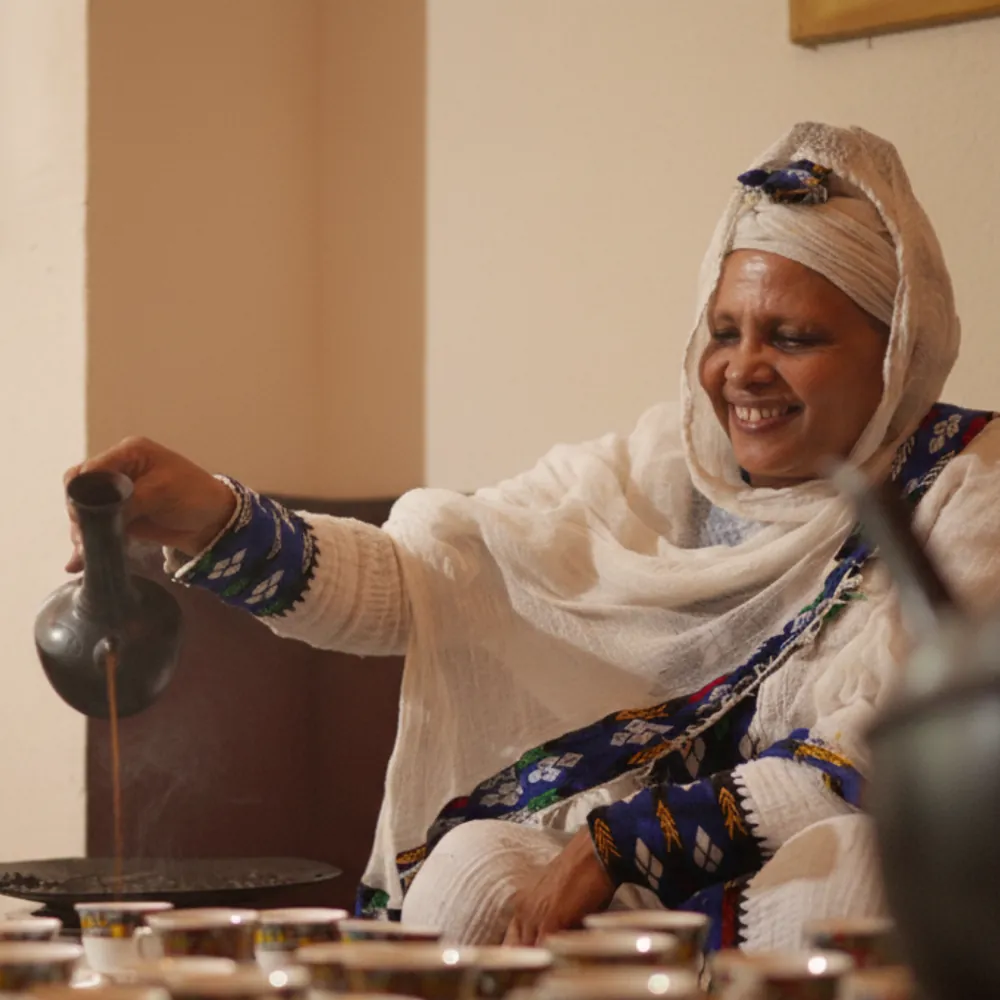
In Ethiopia you do not just "have" a coffee: you share it, and it takes time. The coffee ceremony, called buna, is central to social life. It is held to welcome a guest, celebrate an occasion or simply spend time with neighbours.
The home of coffee
Coffee comes from Ethiopia, more precisely from the Kaffa region in the south-west. Legend has it that a goatherd named Kaldi noticed how lively his goats became after eating the berries of a certain shrub… the coffee plant.
The steps of the ritual
- The coffee corner is set up, often with fresh grass or flowers on the floor, and incense is burned.
- The green coffee beans are washed, then roasted in a small pan over the fire, in front of the guests.
- When they are dark and glossy, the smoking pan is passed around so everyone can breathe in the aroma.
- The beans are ground by hand with a mortar.
- The grounds are brewed in the jebena, a long-necked clay pot.
- The coffee is poured from a height into small handleless cups.
Three rounds
Traditionally three rounds are served, topping up the same coffee with water: abol, the strongest, then tona, then baraka, "the blessing". Staying for all three is a mark of respect. The coffee is often served with popcorn or roasted barley.
More than a drink
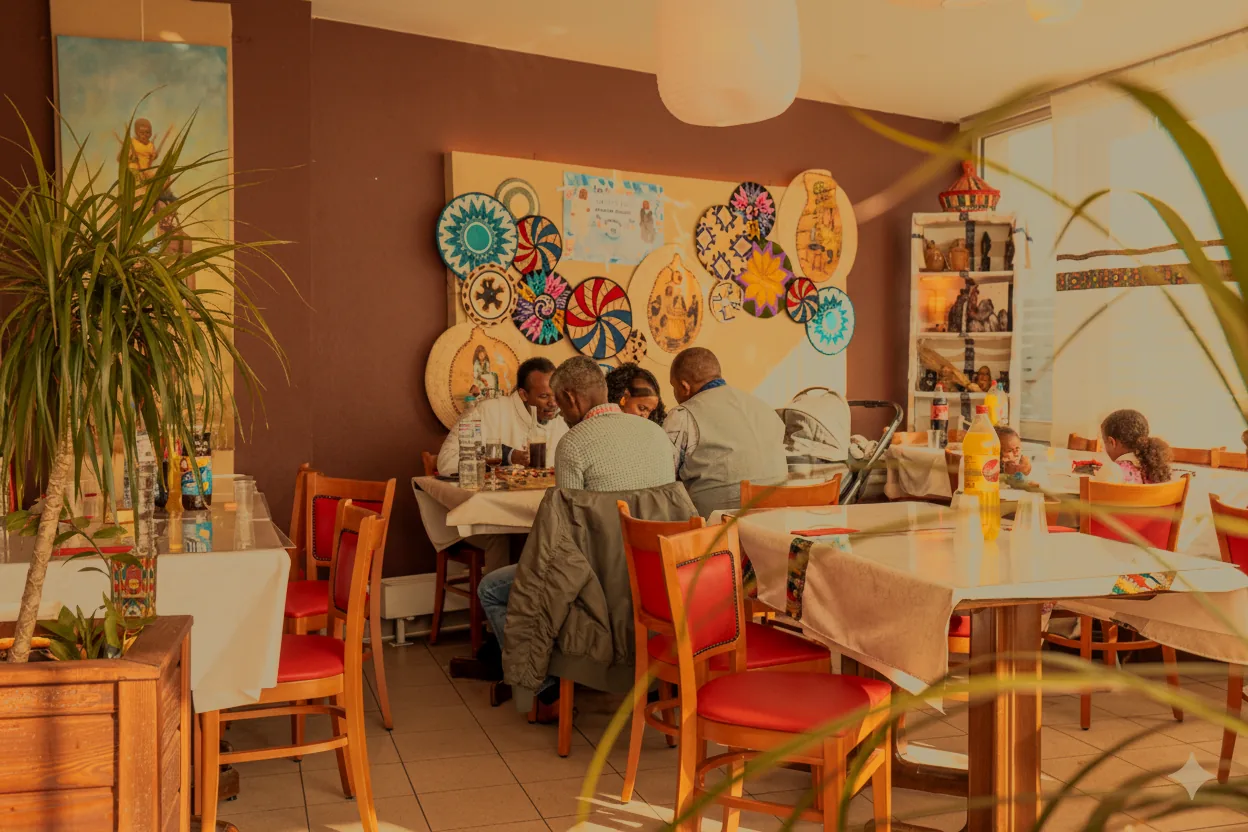
A ceremony can last an hour or more. It is a time to share news, sometimes to settle disagreements, and to check in on one another. That warmth is what we want you to feel at Makda.
Bring it to your event
The coffee ceremony is part of our catering: at a wedding, a family celebration or a corporate event, it gives your guests an unforgettable moment.